



CYP2C19 Inhibitor
-
(S)-(+)-N-3-Benzylnirvanol
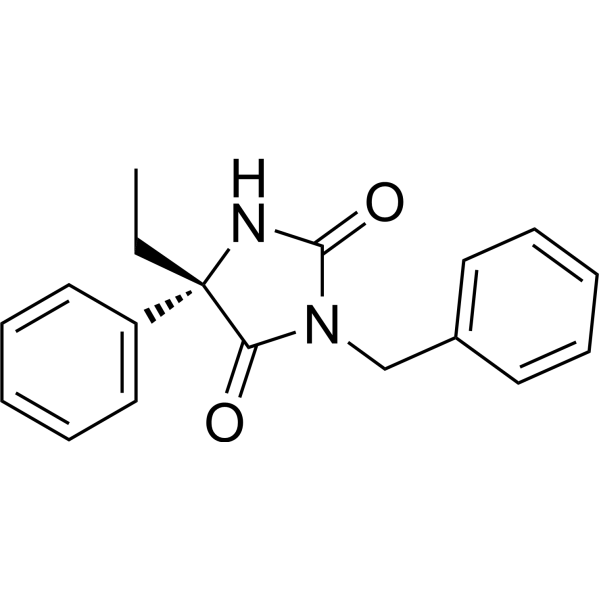 0 ImagesSynonyms: (+)-N-3-Benzylnirvanol
-
Oteseconazole
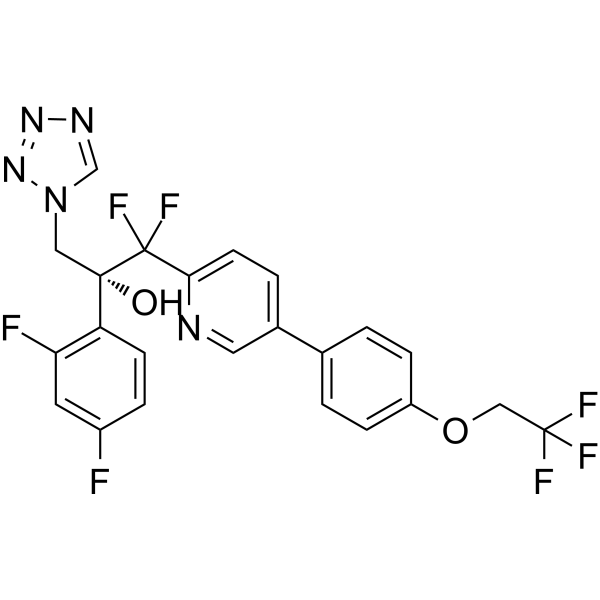 0 ImagesSynonyms: VT-1161
-
Dihydrokavain
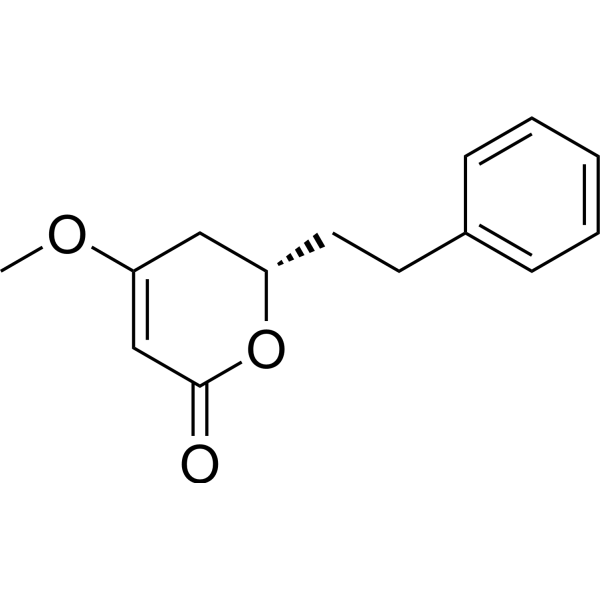 0 ImagesSynonyms: 7,8-Dihydrokawain; 7,8-Dihydrokavain; Marindinin
-
Nivasorexant
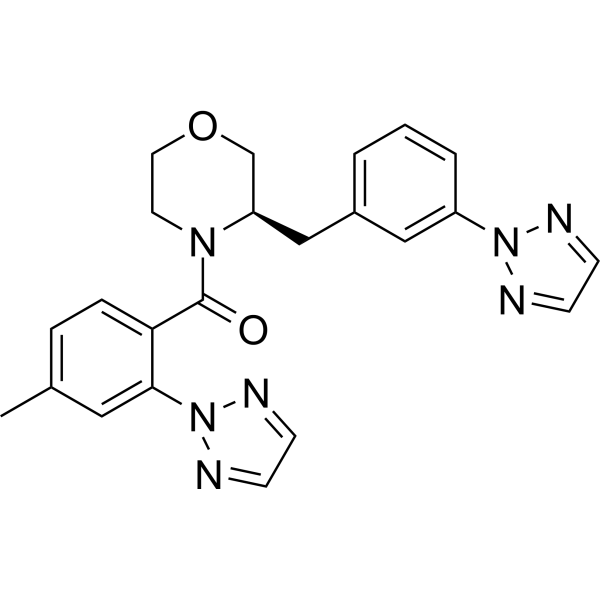 0 ImagesSynonyms: ACT-539313
Nivasorexant (ACT-539313) is an orally active, blood-brain barrier penetrant, selective orexin OX1R inhibitor. Nivasorexant specifically blocks central OX1Rs without affecting OX2Rs, and exhibits competitive inhibitory activity against CYP2C8, CYP2C9, CYP2C19 and CYP3A4 (IC50 values are 25 μM, 8.6 μM, 1.6 μM, 19 μM/44 μM, respectively). Nivasorexant significantly reduces binge-like eating behavior of highly palatable food in rat models and has long-acting properties. Nivasorexant shows no relevant off-target activity against over 130 selected proteins, exhibits favorable safety profiles, and can be used for studies related to binge eating disorder.

-
FGFRs-IN-1
 0 ImagesCat. No.: HY-170846
FGFRs-IN-1 (Compound A16) is the orally active inhibitor for FGFR, that inhibits FGFR1/2/3/4 with IC50s of 2.3, 7, 11, and 163 nM, respectively. FGFRs-IN-1 also inhibits VEGFR1/2/3, Abl, and Flt3 with IC50s of 61, 176, 112, 26, and 353 nM, respectively. FGFRs-IN-1 exhibits weak inhibitory efficacy against CYP enzymes. FGFRs-IN-1 reduces the expression of α-SMA and collagen I, and inhibits epithelial-mesenchymal transition (EMT) in TGF-β1 stimulated A549 cell. FGFRs-IN-1 exhibits anti-inflammatory activity in Bleomycin (HY-17565)-induced mouse pulmonary fibrosis model and CCl4 (HY-Y0298)-induced mouse liver fibrosis model.
-
BMS-223131
 0 ImagesCat. No.: HY-19397CAS No.: 275375-69-4
BMS-223131 (Compound 1) is a potent maxi-K potassium channel opener. BMS-223131 has a strong inhibitory effect on the CYP2C9 enzyme (IC50 = 1.7 μM) and also shows varying degrees of inhibition on other common CYP enzymes such as CYP1A2, CYP2C19, CYP2D6, and CYP3A4. BMS-223131 can enhance the outward current mediated by maxi-K, by promoting K+ efflux to hyperpolarize the cell membrane and reducing Ca2+ influx. BMS-223131 can be used for the research of neurological disease, such as stroke.
-
NNRT-IN-10
 0 ImagesCat. No.: HY-174417CAS No.: 2459751-62-1
NNRT-IN-10 is a potent, selective and orally active non-nucleoside HIV-1 reverse transcriptase (NNRTI) inhibitor with with an EC50 values ranging from 1.16 to 18.3 nM for HIV and its mutant strains. NNRT-IN-10 exhibits good pharmacokinetic properties and favorable safety profiles. NNRT-IN-10 can be used for the study of AIDS, caused by HIV-1.



